History of the Maria Carrillo Adobe
A Place of Continuing Significance
From ancient village to rancho homestead, from conflict to commerce, the Maria Carrillo Adobe embodies the layered and often difficult history of California. It remains a place where Indigenous heritage, early settlement, and the origins of Santa Rosa converge—making it a site of exceptional historical importance and one that continues to hold deep meaning for descendant communities today.
Historic Events and Cultural Themes
The Maria Carrillo Adobe is a rare multicomponent cultural landscape where Indigenous history, Mexican-era settlement, and the early formation of Santa Rosa intersect. For more than 2,000 years, this place has been shaped by human presence, memory, and resilience. Its significance is best understood through several interrelated historical themes.
Exploration and Settlement
The Maria Carrillo Adobe is closely tied to the Mexican-era settlement of Northern California and the formation of Santa Rosa itself.
Doña Maria Ygnacia López de Carrillo was born in 1793 in San Diego and later became one of a small number of single women to receive a Mexican land grant. After her husband’s death, she moved north with her family and, with permission from General Mariano Vallejo, settled on the Santa Rosa Plain.
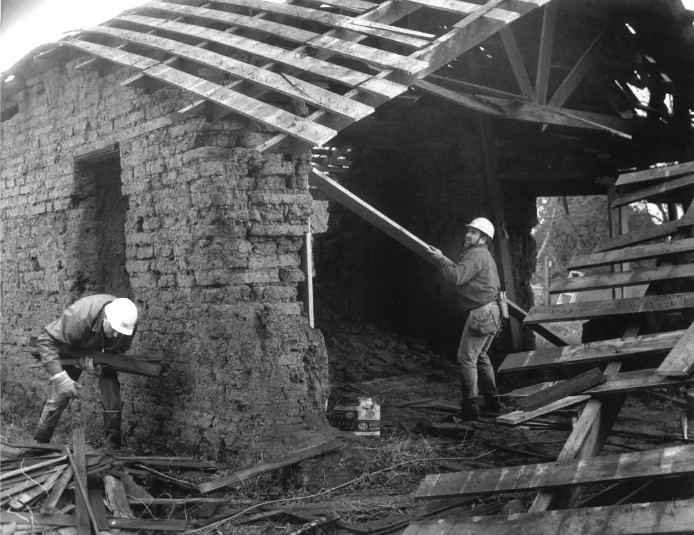
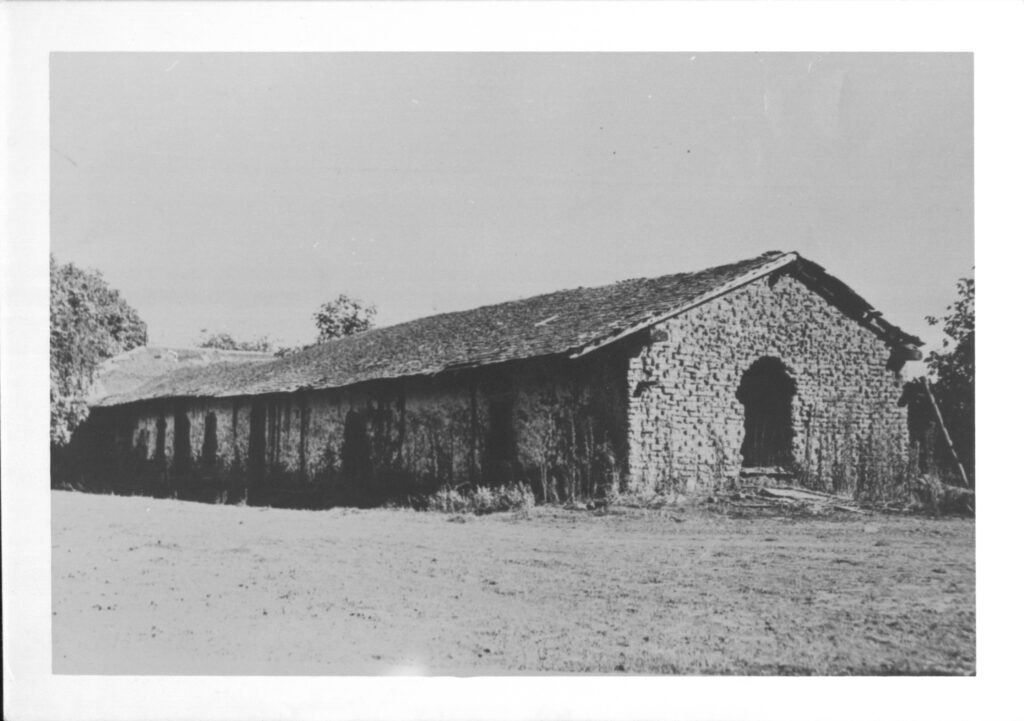
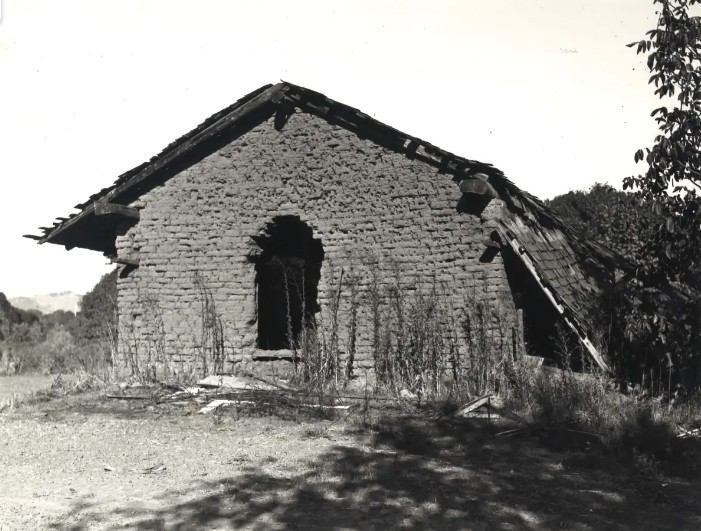
Between 1838 and 1839, Doña Maria oversaw construction of the adobe along Santa Rosa Creek, making it the first non-Native residence in the Santa Rosa Valley. The building was constructed using locally sourced materials—adobe bricks made from creek soils and beams cut from nearby valley oaks. Indigenous labor and Carrillo family members played key roles in its construction, reflecting the complex social relationships of the period.
In 1841, Doña Maria was awarded the Rancho Cabeza de Santa Rosa, an 8,885-acre land grant that helped solidify Mexican control of the region. Her son José Ramon managed thousands of cattle and horses on the rancho, making it one of the most productive operations in the area.
Following her death in 1849, and the commercial activities that followed, the land that once formed part of the rancho became the nucleus of the town of Santa Rosa. In 1853, Julio Carrillo partnered with Barney Hoen to lay out the town grid, donate land for a central plaza and churches, and sell parcels that enabled the city’s growth.
Military History: The Bear Flag Revolt
The Maria Carrillo Adobe is directly associated with events of the Bear Flag Revolt, a pivotal episode in California history that contributed to the transfer of the region from Mexican to United States control.
In June 1846, tensions between American settlers and Mexican authorities escalated into open rebellion. Shortly after American settlers seized the town of Sonoma and imprisoned General Mariano Vallejo, an incident connected to the revolt unfolded at the Carrillo Adobe.
A group of Bear Flaggers arrived at the Rancho Cabeza de Santa Rosa searching for two missing men, Thomas Cowie and George Fowler, who had been captured by Californios resisting American encroachment. The men were briefly held at the Carrillo Adobe before being taken into nearby hills, where they were executed. Their bodies were later recovered and buried by American forces.
The Bear Flaggers ransacked the Carrillo home while searching for the missing men and discovered a cache of Mexican weapons, which they interpreted as evidence of organized resistance. Livestock, arms, and supplies were confiscated. Doña Maria Carrillo’s son, José Ramon Carrillo, was suspected of involvement. A prominent Californios defender, José Ramon later fought in several engagements, including the Battles of Olompali and San Pasqual.
These events place the Maria Carrillo Adobe at the center of the conflict that reshaped California’s political future.
Commerce: The Birth of Santa Rosa’s Economy
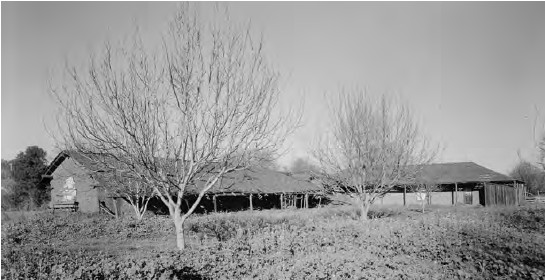
After Doña Maria Carrillo’s death in 1849, the adobe entered a new phase of use that helped launch the local economy of the Santa Rosa Valley.
In 1851, the adobe became a public house and small mercantile operated by David Mallagh, a Scottish immigrant and Carrillo family member by marriage. This marked the first documented commercial enterprise in the Santa Rosa Valley. Goods and supplies were sold to settlers in a region that had previously been dominated by ranching and dispersed homesteads.
In 1852, the property was sold to Alonzo Meacham and Barney Hoen, who established a general store and trading post. That same year, Santa Rosa’s first post office was created at the adobe, with Meacham serving as postmaster. The building also functioned as a stage stop and storage warehouse, becoming a hub for trade extending north to the Russian River and east to Clear Lake.
By 1853, the “old adobe” was a bustling center of activity. Trains of pack mules regularly arrived to load and unload freight, linking Santa Rosa to regional trade networks and accelerating settlement and development.
Ethnic Heritage: Native American
For thousands of years before the adobe was constructed, the land along Santa Rosa Creek was home to a thriving Native American village. Archaeological evidence shows continuous occupation spanning roughly 2,000 years, extending from prehistory into the historic period. The site preserves not only physical remains—such as midden soils, hearths, artifacts, and burials—but also enduring cultural connections to living Native American communities.
Sacred objects have been documented at the site, confirming its role not only as a long-standing village, but also as a place of spiritual significance. The ancestral populations who lived here are directly related to contemporary Native Americans who continue to identify with this land through shared ancestry, cultural traditions, and, in many cases, living languages.
Greg Sarris, Chairman of the Federated Indians of Graton Rancheria, has emphasized the importance of the site to living Tribal communities:
“The Carrillo Adobe is within our ancestral territory of present-day Santa Rosa, California. Of great importance and significance to our Tribe are our ancestors buried near and adjacent to the Adobe, as well as securing our archaeological footprint, which continues to connect us to the earth.”
Chairman Sarris has further noted that recognizing and protecting the Carrillo Adobe is a necessary step toward telling a truthful history—one that acknowledges trauma and loss while ensuring preservation in place of ancestral burial grounds. For Native Americans today, the site remains a tangible and spiritual link to their ancestors and to the land itself.